 materialdif.com
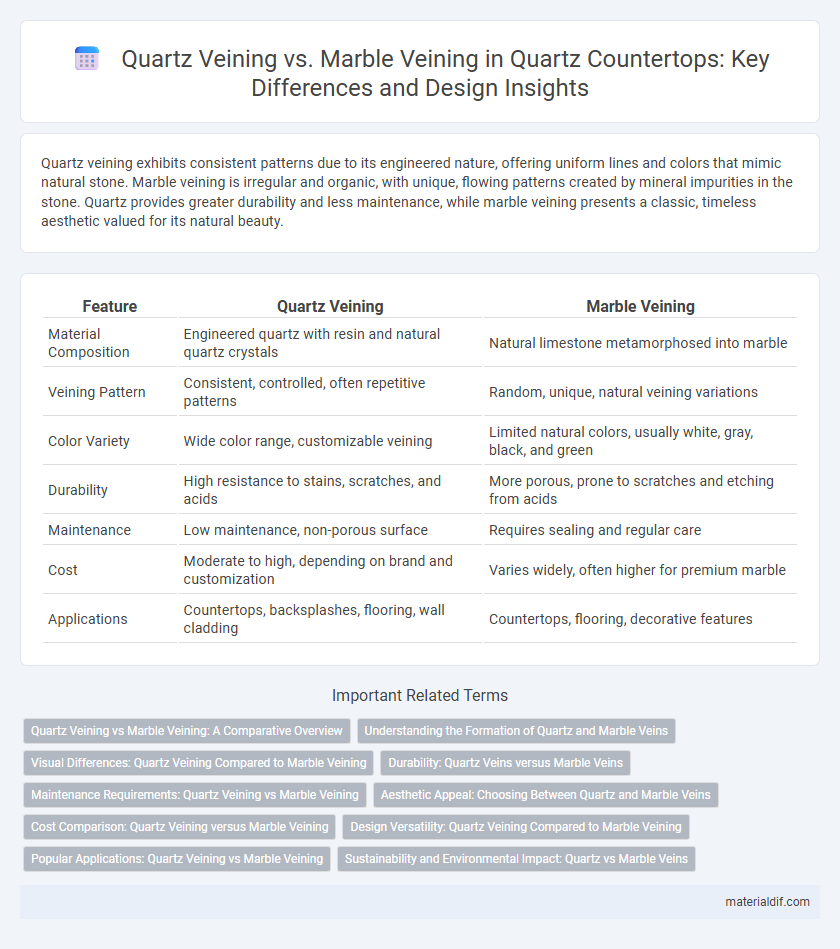
 Quartz veining exhibits consistent patterns due to its engineered nature, offering uniform lines and colors that mimic natural stone. Marble veining is irregular and organic, with unique, flowing patterns created by mineral impurities in the stone. Quartz provides greater durability and less maintenance, while marble veining presents a classic, timeless aesthetic valued for its natural beauty.
Table of Comparison
| Feature | Quartz Veining | Marble Veining |
|---|---|---|
| Material Composition | Engineered quartz with resin and natural quartz crystals | Natural limestone metamorphosed into marble |
| Veining Pattern | Consistent, controlled, often repetitive patterns | Random, unique, natural veining variations |
| Color Variety | Wide color range, customizable veining | Limited natural colors, usually white, gray, black, and green |
| Durability | High resistance to stains, scratches, and acids | More porous, prone to scratches and etching from acids |
| Maintenance | Low maintenance, non-porous surface | Requires sealing and regular care |
| Cost | Moderate to high, depending on brand and customization | Varies widely, often higher for premium marble |
| Applications | Countertops, backsplashes, flooring, wall cladding | Countertops, flooring, decorative features |
Quartz Veining vs Marble Veining: A Comparative Overview
Quartz veining is created through engineered processes, resulting in consistent, customizable patterns that mimic natural stone, whereas marble veining occurs naturally and features unique, irregular patterns. Quartz veining is more resistant to staining, scratching, and etching compared to marble, which is softer and more porous. Maintenance requirements differ significantly, with quartz surfaces demanding less frequent sealing and providing greater durability over time than marble veining.
Understanding the Formation of Quartz and Marble Veins
Quartz veining forms through hydrothermal processes where silica-rich fluids infiltrate rock fractures, cooling and crystallizing to create distinct quartz veins. Marble veining, on the other hand, develops from metamorphic recrystallization of limestone or dolomite under intense heat and pressure, causing mineral impurities like graphite or iron oxides to align into vein patterns. Understanding these formation mechanisms highlights the durability and aesthetic differences between quartz veins' sharp, translucent patterns and the softer, diffuse veining typically found in marble.
Visual Differences: Quartz Veining Compared to Marble Veining
Quartz veining typically exhibits more uniform and consistent patterns with sharper edges and a controlled flow, whereas marble veining displays natural, irregular, and softer lines that vary in intensity and direction. The coloration in quartz veining often appears more vibrant and predictable due to engineered pigments, contrasting with marble's organic veins that blend subtly with the stone's base color. Quartz surfaces maintain a polished, consistent finish enhancing veining clarity, while marble's veining can show more texture and variation under different lighting conditions.
Durability: Quartz Veins versus Marble Veins
Quartz veining demonstrates superior durability compared to marble veining due to its engineered composition, which resists chipping, scratching, and staining more effectively. Marble veins, formed through natural mineral deposits, are more susceptible to etching and damage from acidic substances, making them less resilient in high-traffic or kitchen environments. This enhanced durability of quartz veining ensures longer-lasting aesthetic appeal and structural integrity in countertops and surfaces.
Maintenance Requirements: Quartz Veining vs Marble Veining
Quartz veining requires minimal maintenance due to its non-porous surface, making it resistant to stains, scratches, and bacterial growth. Marble veining, by contrast, demands regular sealing and careful cleaning to prevent etching and discoloration caused by acidic substances and moisture. The durability and low upkeep of quartz veining make it an ideal choice for high-traffic areas compared to the more delicate marble veining.
Aesthetic Appeal: Choosing Between Quartz and Marble Veins
Quartz veining offers consistent patterns and vibrant colors due to its engineered composition, making it ideal for modern, uniform aesthetic appeal. Marble veining presents natural, unique swirls and variations that enhance luxury and timeless elegance in classic interior designs. Selecting between quartz and marble veins depends on the desired balance between predictable design and natural artistry in decorative surfaces.
Cost Comparison: Quartz Veining versus Marble Veining
Quartz veining typically offers a more cost-effective option compared to marble veining due to its engineered production process, which allows for consistent patterns and lower material waste. Marble veining, being natural and unique, often requires more extensive extraction and craftsmanship, resulting in higher prices. Homeowners seeking budget-friendly yet aesthetically appealing veining often prefer quartz for its affordability and durability.
Design Versatility: Quartz Veining Compared to Marble Veining
Quartz veining offers greater design versatility compared to marble veining due to its engineered nature, allowing precise control over pattern, color, and intensity. Unlike marble's natural, unpredictable veins, quartz can mimic various veining styles or create unique, consistent designs suitable for contemporary and classic interiors. This customization flexibility makes quartz a preferred choice for homeowners and designers seeking specific aesthetic outcomes and uniformity across large surface areas.
Popular Applications: Quartz Veining vs Marble Veining
Quartz veining offers consistent patterns and durability, making it ideal for kitchen countertops, bathroom vanities, and commercial surfaces where stain resistance and low maintenance are crucial. Marble veining provides unique, natural aesthetics favored in luxury flooring, fireplace surrounds, and decorative wall claddings, despite its higher porosity and need for regular sealing. Popular applications of quartz veining leverage engineered uniformity and strength, while marble veining highlights natural beauty in high-end residential and heritage projects.
Sustainability and Environmental Impact: Quartz vs Marble Veins
Quartz veining typically results from engineered processes combining natural quartz with resin, offering a more sustainable option due to reduced quarrying and waste compared to marble veining formed by natural mineral deposits. Marble extraction involves extensive mining that disrupts ecosystems and generates significant carbon emissions, while quartz surfaces often incorporate recycled materials, minimizing environmental impact. Choosing quartz veining over marble veining supports eco-friendly practices by promoting resource efficiency and lowering the carbon footprint associated with stone production.
Quartz Veining vs Marble Veining Infographic